
Welcome back to another blog post! Last week we did a spotlight post on NYCs “risky” adventure playgrounds. In these inner-city parks children are encouraged to explore and play without the direct intervention of parents. Materials such as wood, nails, paint, fabric, tires, etc. are available to the children, and the parents are asked to wait outside of the park boundaries where they can observe but not intervene. In these parks children learn important lessons about identifying risky behaviors in a controlled environment, while parents aren’t allowed inside there are playworkers that watch over the children and intervene and redirect when any truly dangerous behavior occurs. This week we will be covering more of the history behind these kinds of adventure parks and exploring more examples!
As mentioned in the previous blog post, the first adventure playground was constructed in 1943 in Copenhagen, Denmark. The Park designer behind this first adventure park a man named C.T. Sorenson. Sorenson had designed many parks previously, but noticed children preferred to engage and play everywhere except the traditional playgrounds. He noticed that children had such a wonderful and wild imagination, why not give them a place to explore that – and thus, the adventure playground was born.
“A junk playground in which children could create and shape, dream and imagine a reality”
C.T. Sorenson
The adventure playgrounds really started to take off in 1946 when Lady Allen of Hurtwood visited Sorenson’s adventure playground, was impressed, and brought the idea to London. There are an estimated 1,000 adventure playgrounds in Europe, yet there are only a handful here in the U.S. Germany alone has 400 different adventure playgrounds, clearly they have been incredibly successful and favored outside of the U.S. Berlin even hosted a worldwide conference, “Anima21: Adventure Playgrounds and City Farms for the 21st Century,” where a variety of workshops were held to expand the limits of imaginative play.
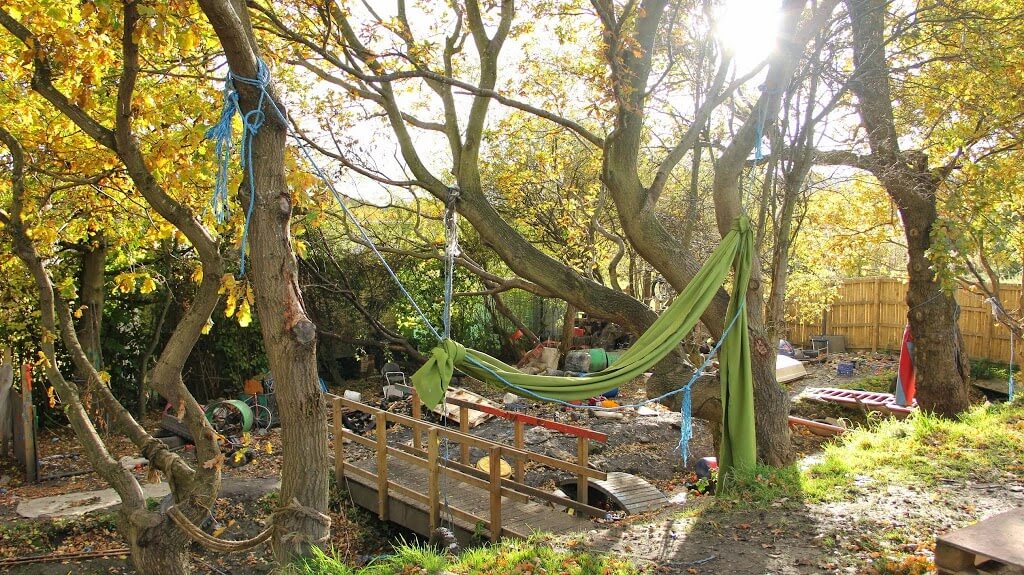
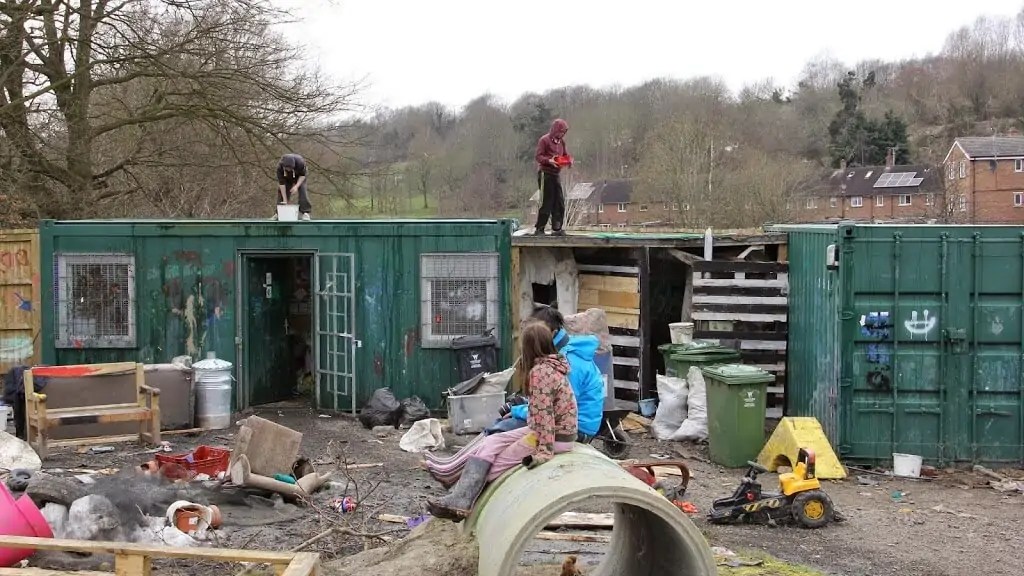
A popular adventure playground is known as “The Land,” located in Whales. The Land opened in 2011 and an entire acre of fenced in play area, there is even a small stream that runs through the playground. Like other adventure playgrounds, The Land has a variety of materials available to children including pallets, rope, tires, hammers, etc. Below are some photos of The Land, shot by Erin Davis (who also created a documentary for this adventure park in 2015).
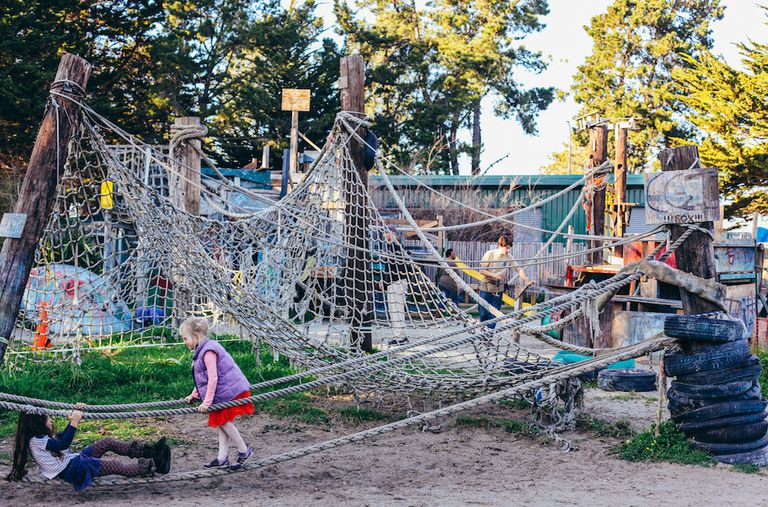
Berkeley California is home to one of few adventure playgrounds in the U.S. In the photo below you can see that this adventure playground contains netting and abstract structures for the children to climb on, but there is also the typical tools and materials available to the children as well. Interestingly, parent supervision is required at this adventure playground since there are no playworkers available.

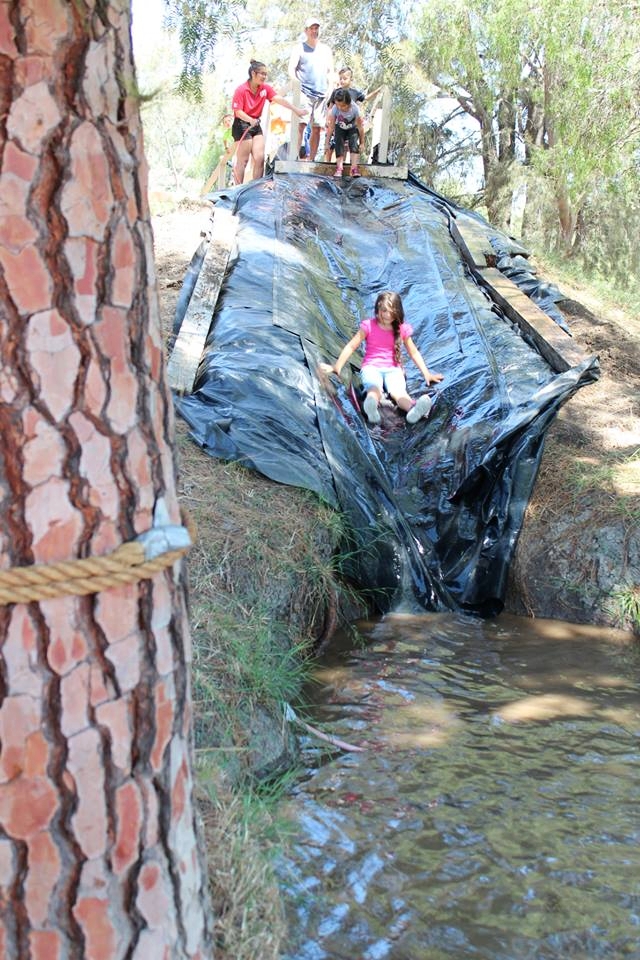
One of the most exciting things about adventure playgrounds is that while they all hold onto the same concept, each of them are unique. There is so much room for creativity with each adventure park. A community could come together and decide which elements they would want to include in their own adventure park. There are opportunities for painting, building, playing, etc. the choices are only limited by imagination. More photos of different kinds of adventure parks have been included below, and at the end of the blog a list of sources and additional articles are available.
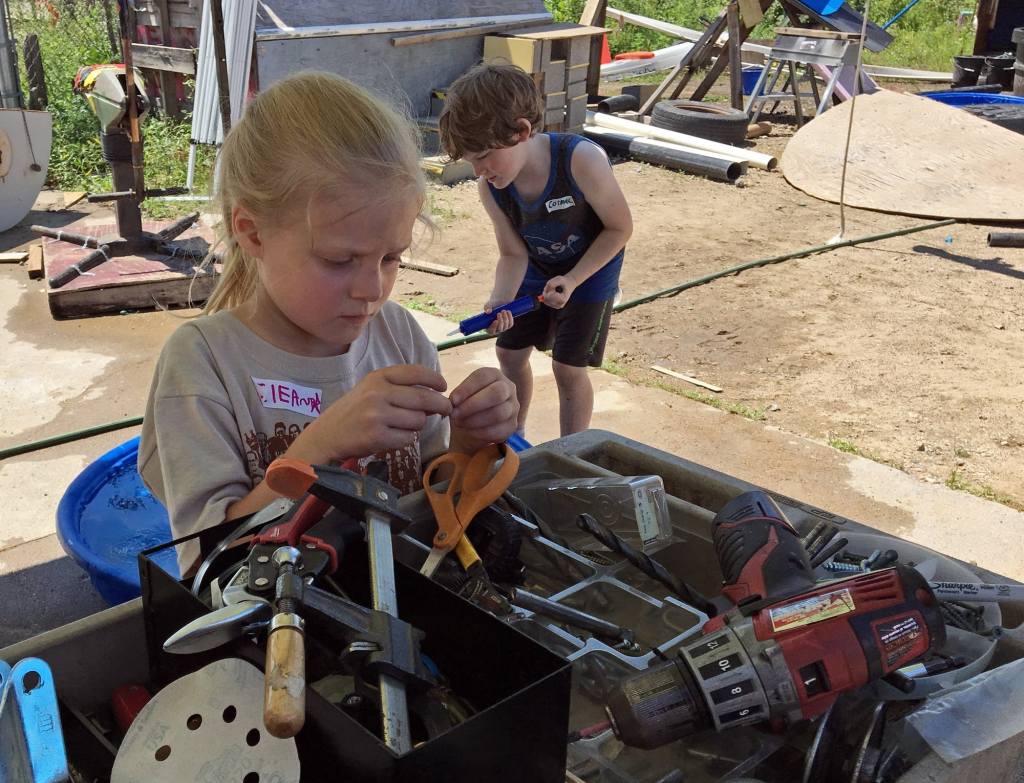
If you are somebody who feels like adventure parks are a bad idea, I invite you to read this article by a blogger named Jill: 10 Reasons Why You Shouldn’t Take Your Kids to Adventure Playground.
Additional Sources:
Adventure Playgrounds – A Brief History
The Value Of Wild, Risky Play: Fire, Mud, Hammers And Nails
THE LAND: ADVENTURE PLAYGROUND
Huntington Beach Adventure Playground
At the Adventure Playground, one man’s trash is a child’s treasure

