Nature-based Park Design

Welcome to another innovative park design spotlight post! This week we’re going to be taking a deeper look into some nature integrated park design. These parks focus on using natural elements, such as trees, dirt, rocks, and water, to encourage creativity and exercise of gross motor skills in children. To understand what a natural playground looks like we’ll be looking at some different examples from around the world.

WILD PLAY Garden in Sydney, Australia

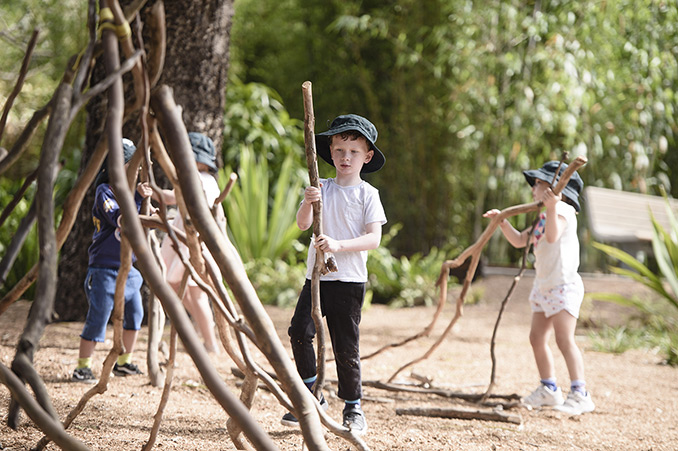
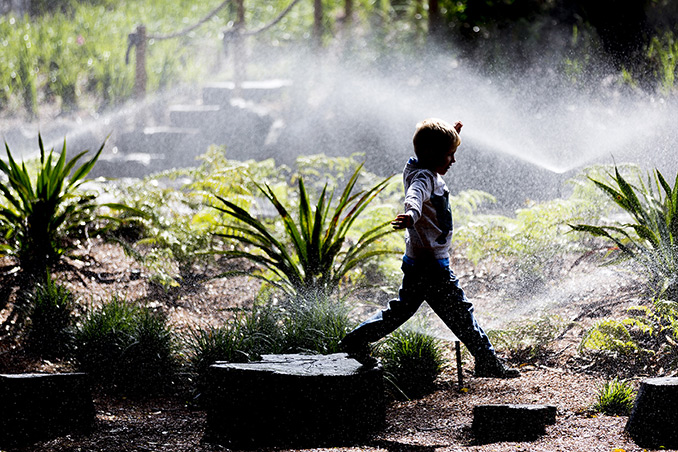
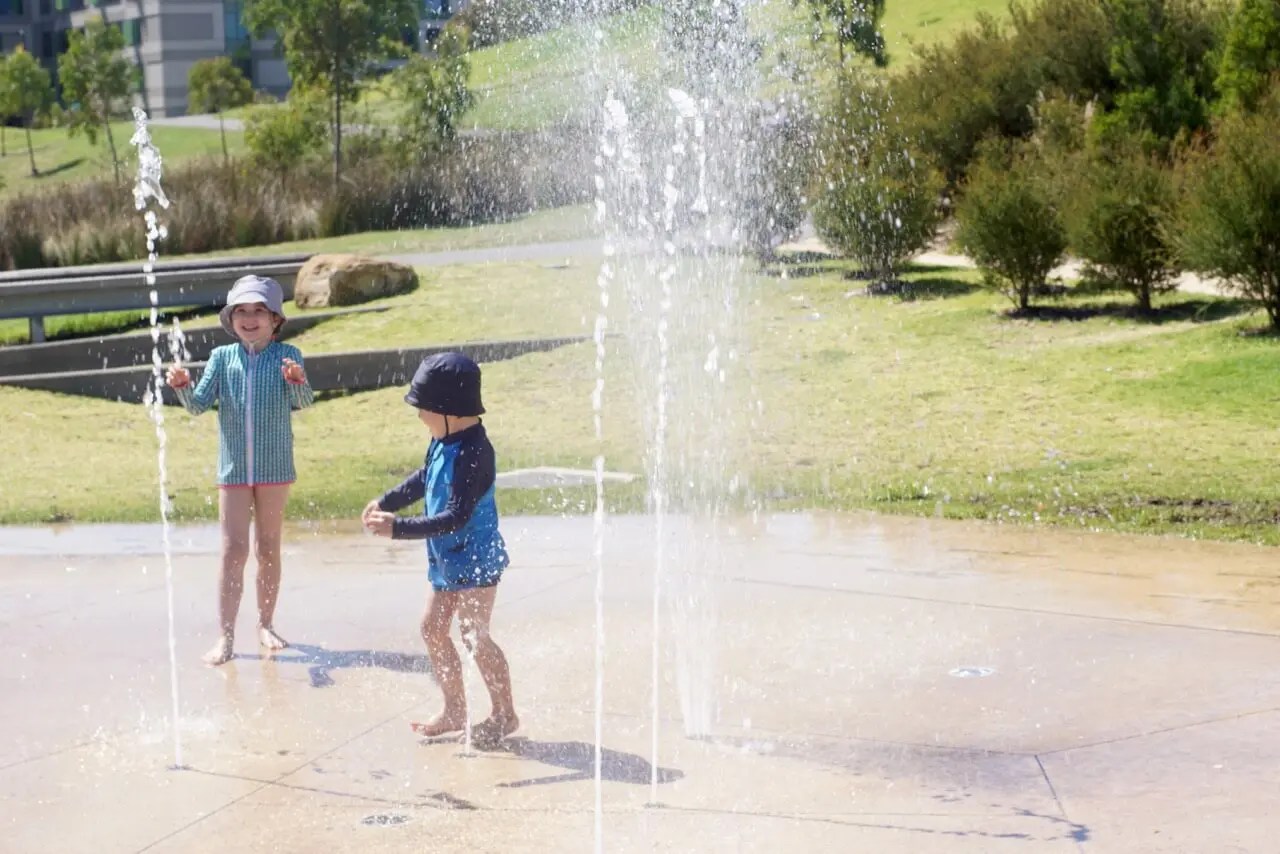
WILD PLAY Garden was opened in 2017 and covers approximately 70,000 sq. ft., it is a truly massive natural playground. The Park was designed to accommodate children between the ages of 2 and 12 and mostly consists of trails surrounded by densely planted trees and shrubs. There are approximately 12,700 trees, shrubs, grasses, and succulents planted in the park. The designers of the playground also paid special attention to making sure that the vegetation was native to Sydney, which is a great practice to integrate anywhere! Other unique elements added to this park include balancing structures made of wood, splash pads, and rock creek beds. Below are some photos from WILD PLAY and a quote from the park designers. 
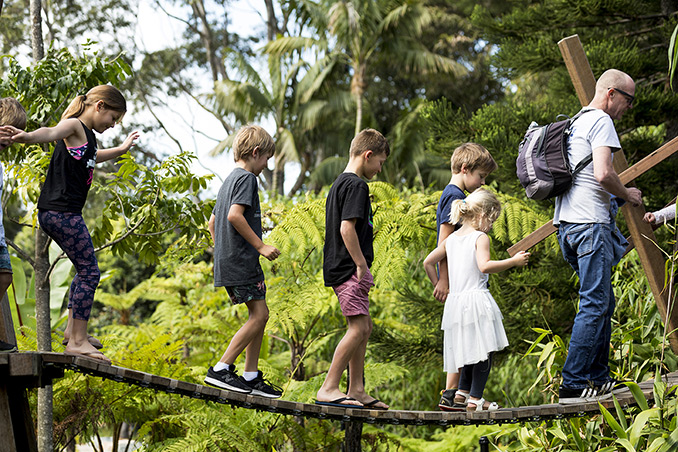
WILD PLAY in Sydney, Australia
Credit:worldlandscapearchitect.com

“Kids like discovery, challenges, movement and adventure. They thrive on being in nature – playing with water, climbing trees, jumping through puddles, hiding in trees. We know this instinctively as parents, and as designers we build these observations into our work.” 

Sacha Coles, ASPECT Studios Director

Royal Park Nature Playground in Melbourne, Australia

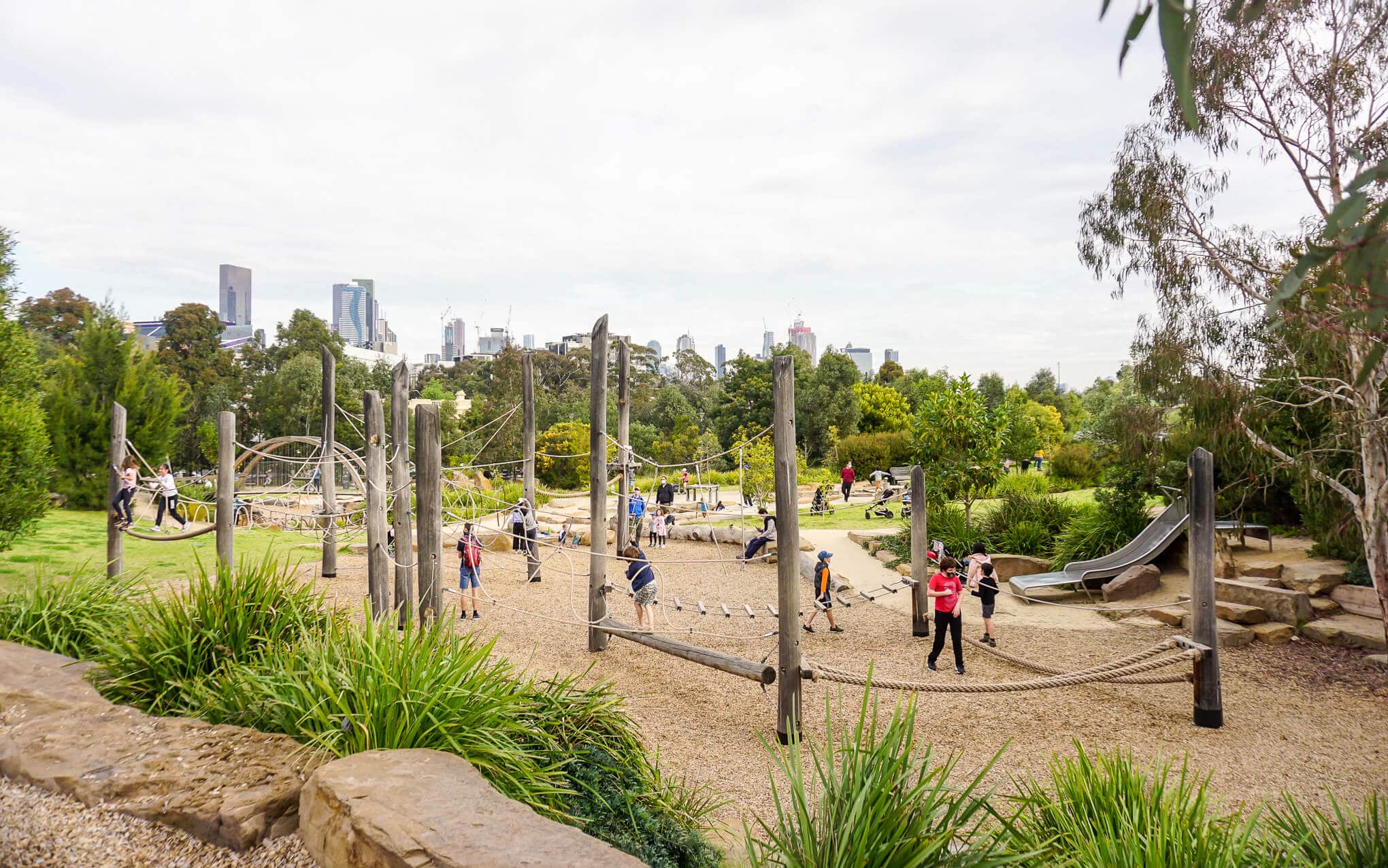
This nature-based play space has elements that are generally geared to slightly older children than the previous park, generally 5 and up. This Park features more climbing structures and obstacle courses that generally is suited for slightly older children. One of the most interesting features of Royal Park is that there are no stairs, instead the designers used big slabs of rocks to create natural stairs. In addition to the climbing structures, this park also includes a water feature, swing set, and slides. 
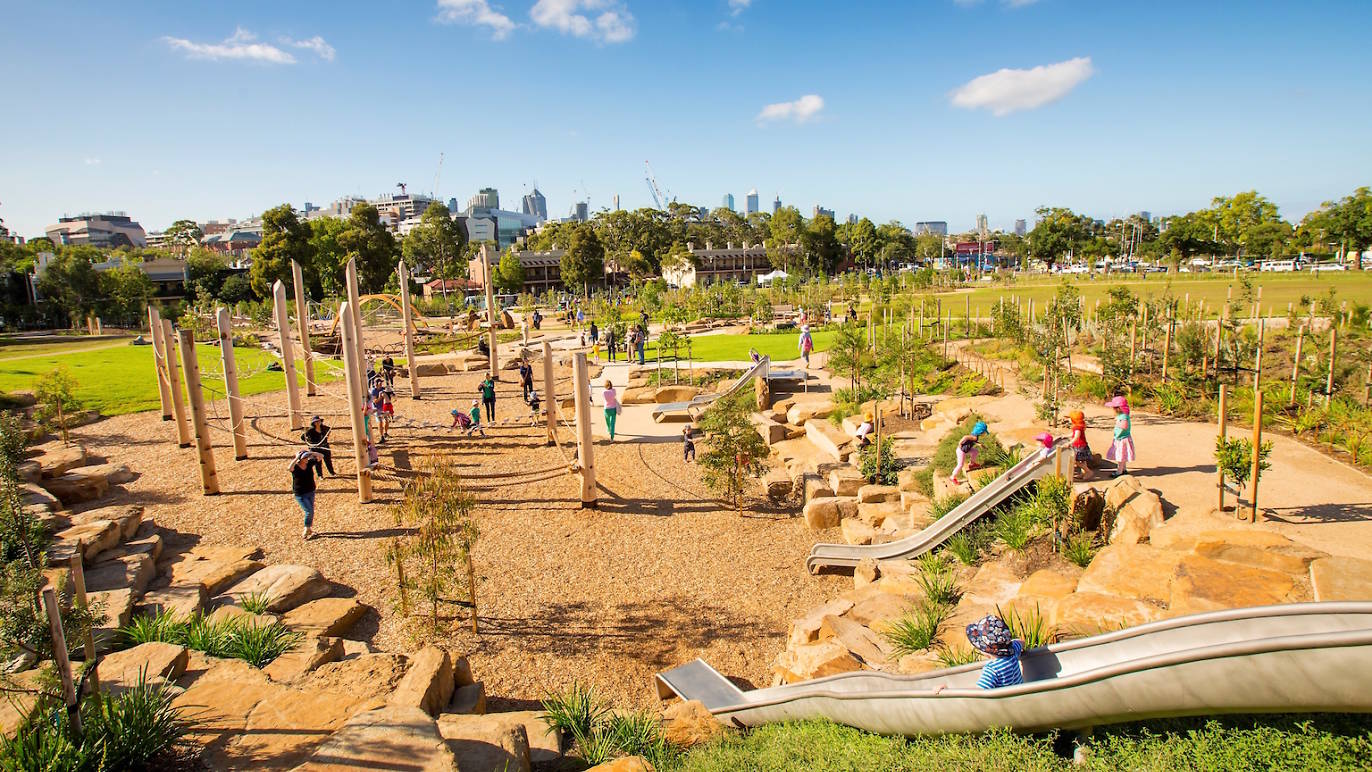
Royal Park in Melbourne, Australia.
Credit: D Hannah & tothotornot.com

Westmoreland Nature Playground in Portland, Oregon

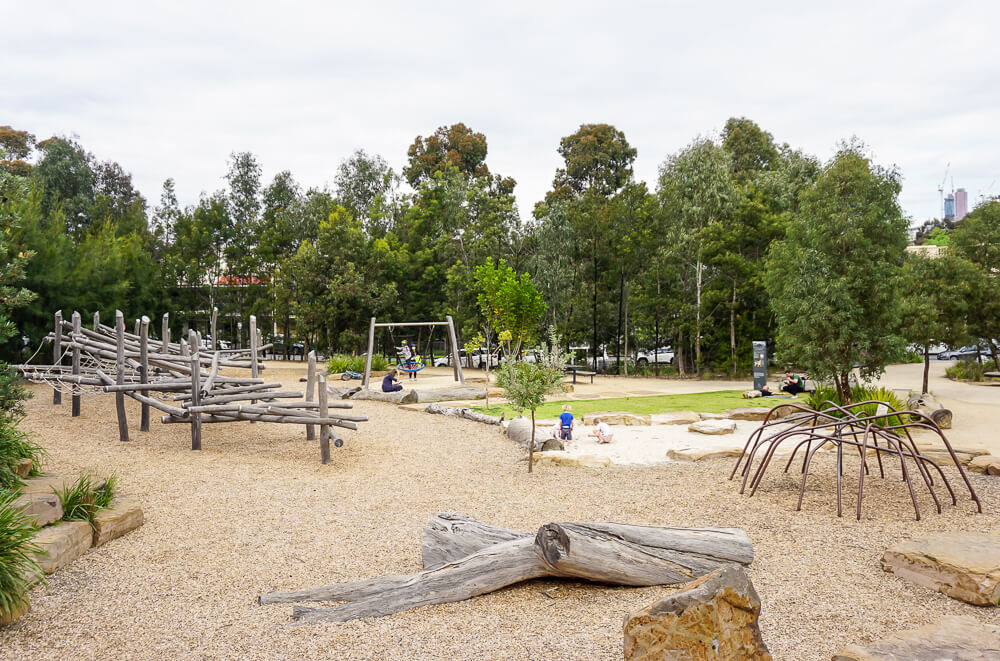
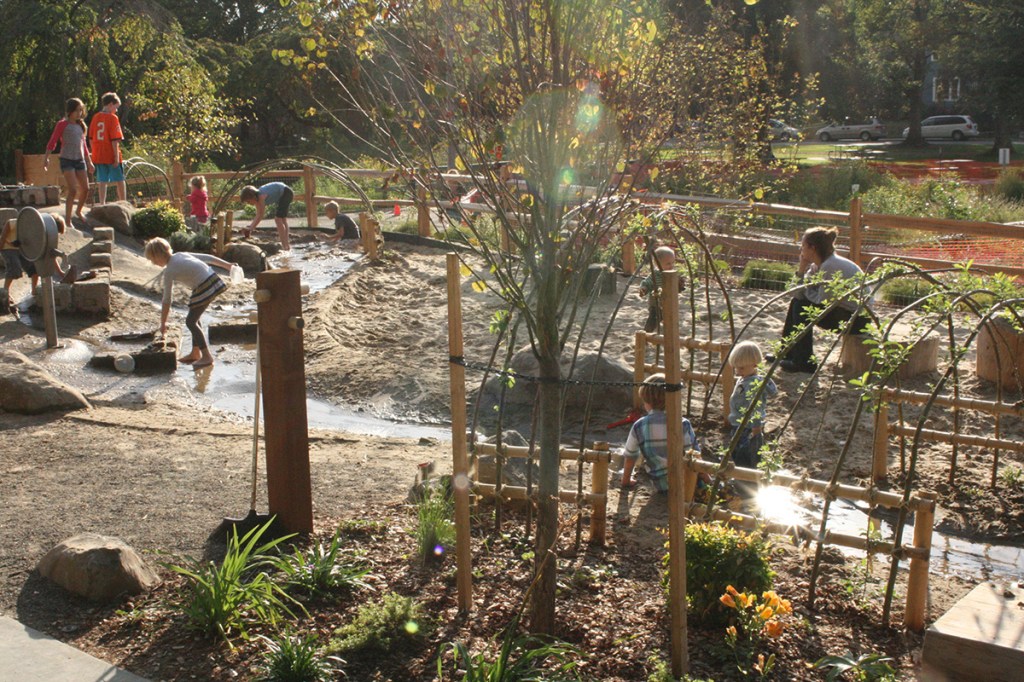
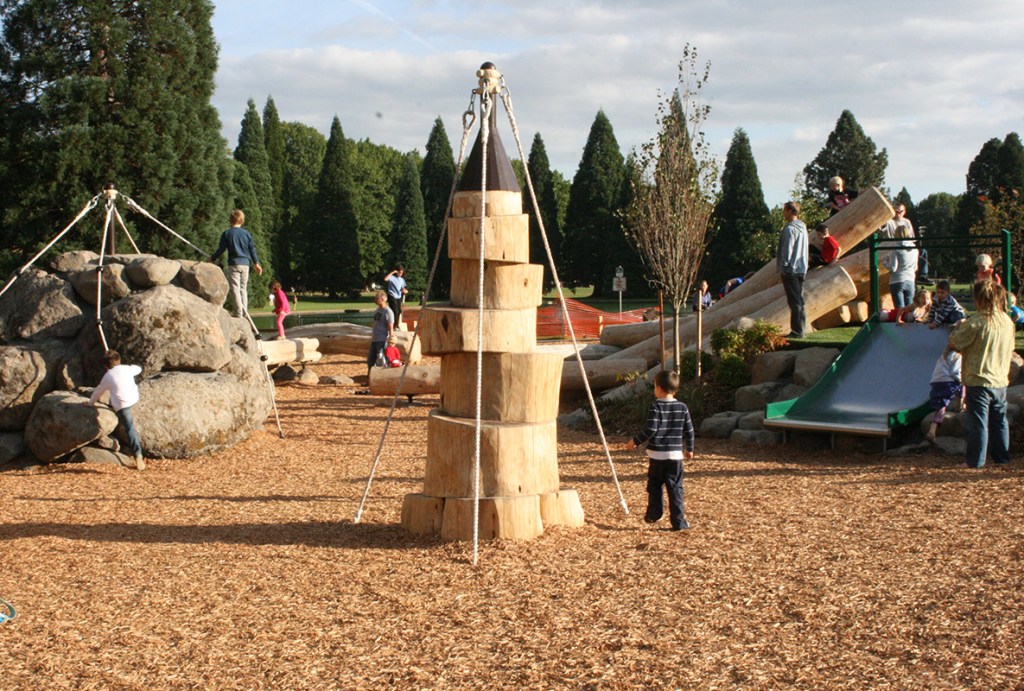
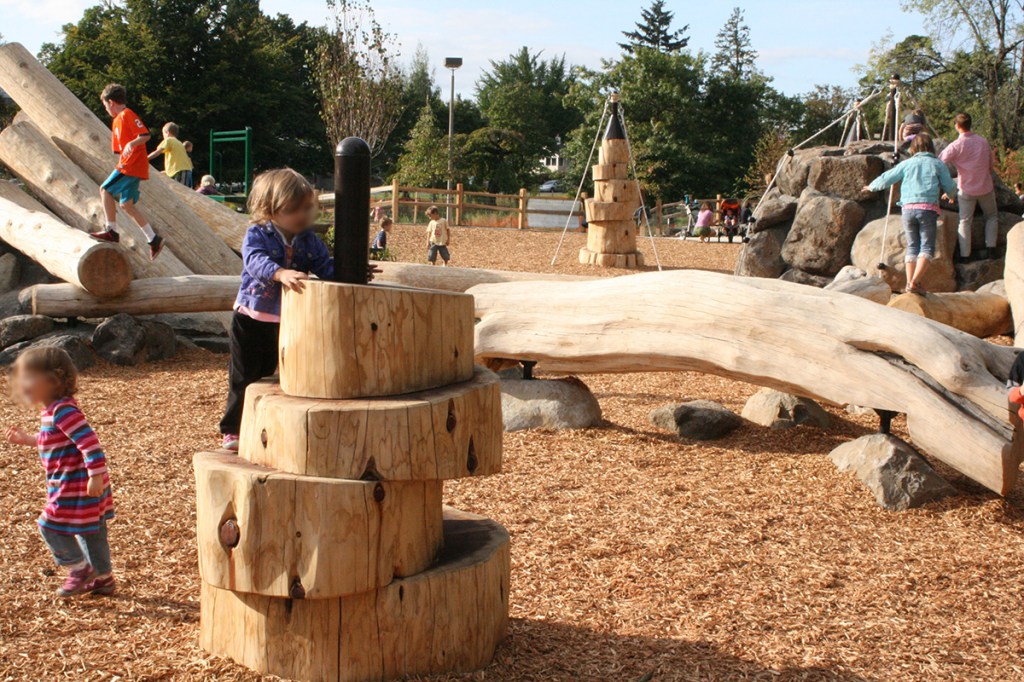
The Westmoreland Nature Playground in Oregon is another great example of a nature-based play space. This Park was designed to mimic the spring fed creek that flows through the park. While the creek itself is inaccessible to preserve salmon spawning sites, the playground includes a creek play area to mimic the natural phenomenon. In the creek play areas children have access to sand tables and tools and water pumps that flow through channels down towards the sand play area. Apart from the creek play area, this park also includes a more adventurous aspect with slides and climbing mounds. Carefully designed and rooted log and boulder mounds are available for children to climb. There are also loose sticks scattered around that park that can be used to build mini forts and structures.  
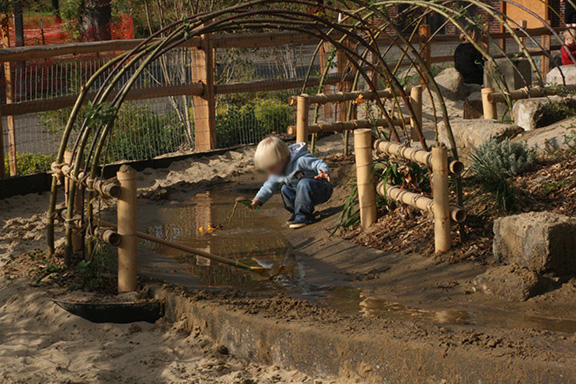
Westmoreland Nature Playground in Portland, Oregon
Credit: learninglandscapesdesign.com

Nature-based Playgrounds in Columbia Valley

One of the most valuable aspects of natural playgrounds is that they are adaptable. There is no real rulebook for creating one of these parks, which means any community could use their imagination to make a nature playground that would best suit their own needs. For example, if CVPRD obtains a lot for a park that either has an interesting shape, or some standalone natural features – such as a large rock or stump – these elements could be incorporated into a natural park design! Another positive aspect of this kind of park design is how it seamlessly connects urban and natural development. Columbia Valley has lots of beautiful natural features, and a natural park could be a way blend in with and emphasize those features. If you’re curious to look at more nature-based playgrounds, check out some of the links below.


Sources used to make this post:

Ian Potter Children’s WILD PLAY Garden opens in Sydney’s Centennial Parklands

HOT: Royal Park Nature Play, Parkville

Westmoreland Nature Play Area Opens

The Big Deal About Natural Playgrounds

Additional Sources:

Tumbling Bay Playground (London)

Morialta Mukanthi Conservation Park Playground (Australia)

Fairy-tale Treehouse Hovers Amid Cherry Blossom Trees (Japan)
History of Adventure/Risk/Junk Playgrounds

Welcome back to another blog post! Last week we did a spotlight post on NYCs “risky” adventure playgrounds. In these inner-city parks children are encouraged to explore and play without the direct intervention of parents. Materials such as wood, nails, paint, fabric, tires, etc. are available to the children, and the parents are asked to wait outside of the park boundaries where they can observe but not intervene. In these parks children learn important lessons about identifying risky behaviors in a controlled environment, while parents aren’t allowed inside there are playworkers that watch over the children and intervene and redirect when any truly dangerous behavior occurs. This week we will be covering more of the history behind these kinds of adventure parks and exploring more examples!

As mentioned in the previous blog post, the first adventure playground was constructed in 1943 in Copenhagen, Denmark. The Park designer behind this first adventure park a man named C.T. Sorenson. Sorenson had designed many parks previously, but noticed children preferred to engage and play everywhere except the traditional playgrounds. He noticed that children had such a wonderful and wild imagination, why not give them a place to explore that – and thus, the adventure playground was born. 

“A junk playground in which children could create and shape, dream and imagine a reality”

C.T. Sorenson

The adventure playgrounds really started to take off in 1946 when Lady Allen of Hurtwood visited Sorenson’s adventure playground, was impressed, and brought the idea to London. There are an estimated 1,000 adventure playgrounds in Europe, yet there are only a handful here in the U.S. Germany alone has 400 different adventure playgrounds, clearly they have been incredibly successful and favored outside of the U.S. Berlin even hosted a worldwide conference, “Anima21: Adventure Playgrounds and City Farms for the 21st Century,” where a variety of workshops were held to expand the limits of imaginative play. 

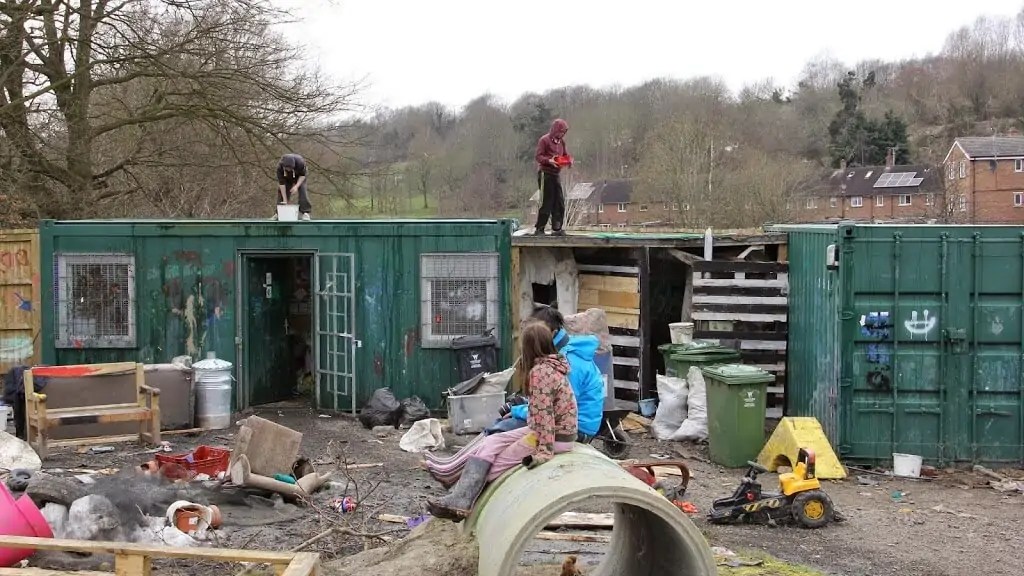
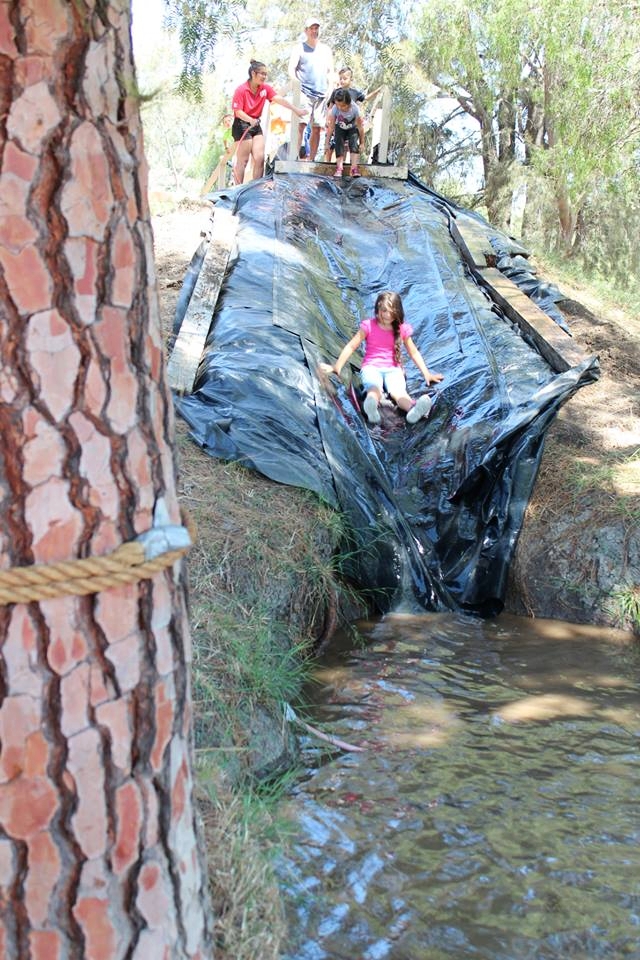
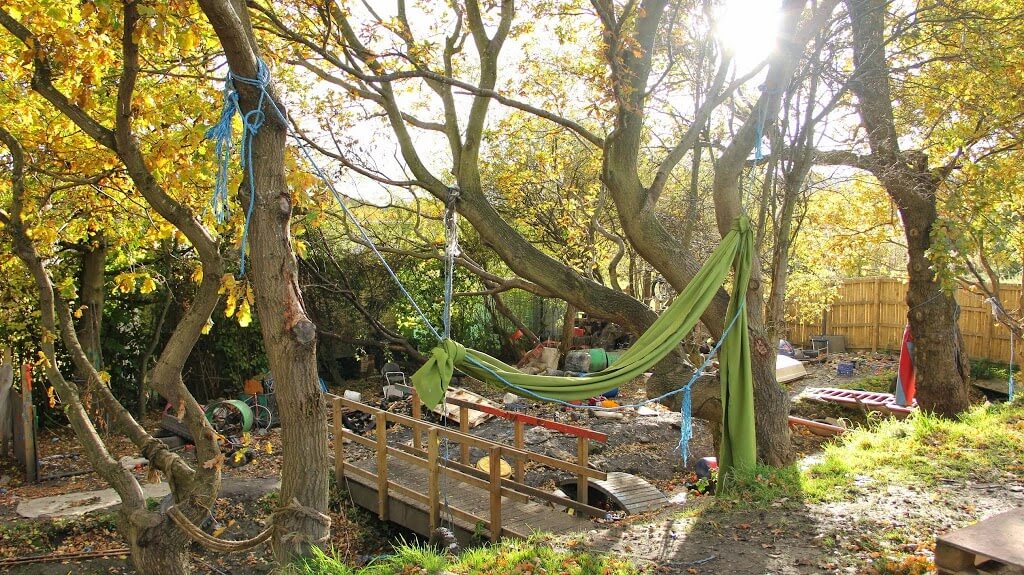
A popular adventure playground is known as “The Land,” located in Whales. The Land opened in 2011 and an entire acre of fenced in play area, there is even a small stream that runs through the playground. Like other adventure playgrounds, The Land has a variety of materials available to children including pallets, rope, tires, hammers, etc. Below are some photos of The Land, shot by Erin Davis (who also created a documentary for this adventure park in 2015). 

(1) The Land adventure playground photographed by Erin Davis
(2) The Land adventure playground photographed by Erin Davis

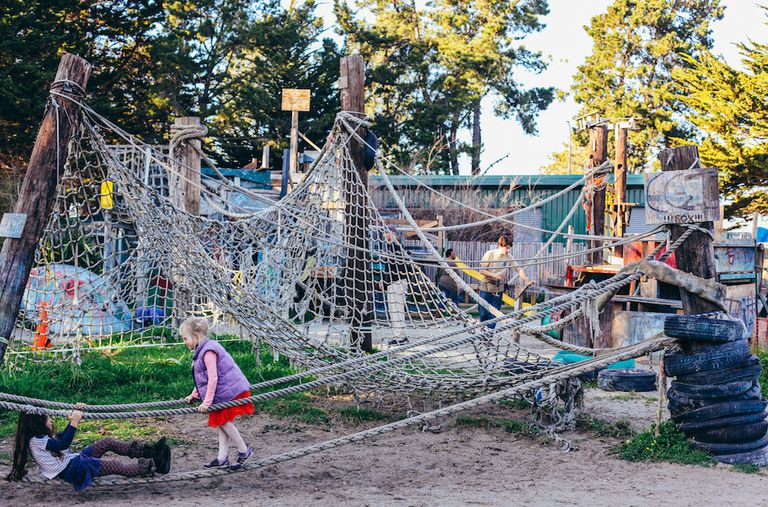
Berkeley California is home to one of few adventure playgrounds in the U.S. In the photo below you can see that this adventure playground contains netting and abstract structures for the children to climb on, but there is also the typical tools and materials available to the children as well. Interestingly, parent supervision is required at this adventure playground since there are no playworkers available.

Adventure Playground in Berkeley, CA photographed by Chris Roberts Photography

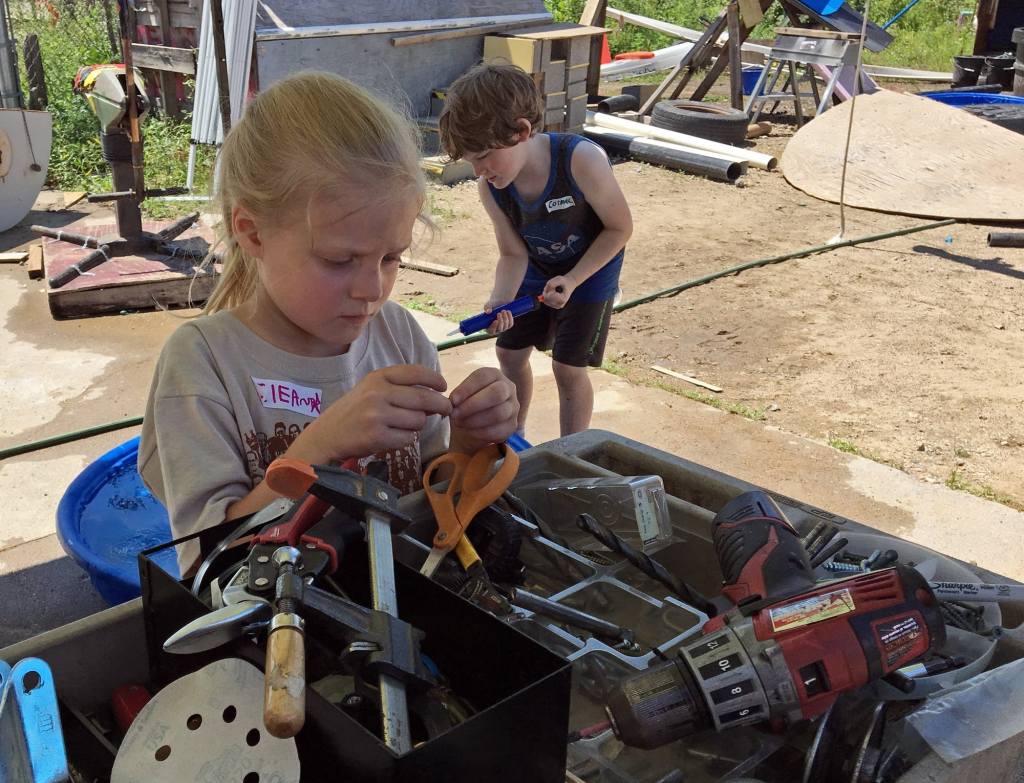
One of the most exciting things about adventure playgrounds is that while they all hold onto the same concept, each of them are unique. There is so much room for creativity with each adventure park. A community could come together and decide which elements they would want to include in their own adventure park. There are opportunities for painting, building, playing, etc. the choices are only limited by imagination. More photos of different kinds of adventure parks have been included below, and at the end of the blog a list of sources and additional articles are available. 

Adventure Park in Huntington Beach, CA photographed by Catheryn Cervantes
Adventure Playground in Berkeley, CA photographed by Teddy Cross
Adventure Playground in Minneapolis, MN credit to Gabriel Kwan

If you are somebody who feels like adventure parks are a bad idea, I invite you to read this article by a blogger named Jill: 10 Reasons Why You Shouldn’t Take Your Kids to Adventure Playground.

Additional Sources:

Adventure Playground History

Adventure Playgrounds – A Brief History

The Value Of Wild, Risky Play: Fire, Mud, Hammers And Nails

THE LAND: ADVENTURE PLAYGROUND

Adventure Play in Berkeley

Huntington Beach Adventure Playground

At the Adventure Playground, one man’s trash is a child’s treasure

A Short History of Playgrounds

Adventure Playgrounds: A Children’s World in The City

New York City’s Riskiest Park – play:groundNYC

CVPRD is excited to share another blog post series, this time showcasing different unconventional and extraordinary parks. We’ll be taking the next few weeks to research and highlight different park designs that are truly outside of the box. This week we’ll be diving into what is coined New York City’s Riskiest Park, enjoy!

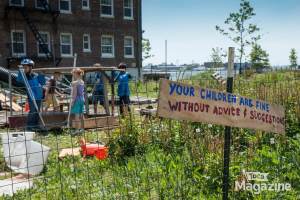
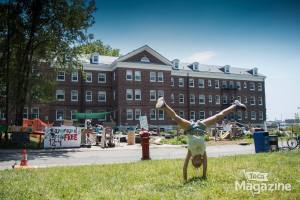
What is the first thing that comes to mind when you hear the words “risk” and “park” in the same sentence? It may be safe to assume that most people might feel uncomfortable by this pairing of words, certainly they would not assume that a risky park would be a place suitable for children. Well, a group of parents, teachers, and artists decided to challenge this common though by opening a park known as “play:groundNYC” in New York City, where children are encouraged to engage in self-directed play. Where risk is not seen as an inherently bad thing that one must avoid, but a critical part in children’s ability to assess and understand their own risk-taking behaviors.

Children freely exploring creative play at NYCs play:ground.
Credit: Marj Kleinman

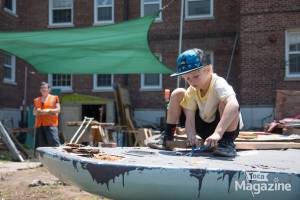
Play:groundNYC is a 50,000 sq. ft. park where children are able to explore, destroy, create, and build freely – without parental interference. In this unique park, children have opportunities to explore a variety of materials including nails, saws, hammers, tires, paint, wood, and fabric. You may be thinking to yourself that this park sounds like a catastrophe waiting to happen, parents aren’t allowed inside, and children have free reign over all these potentially dangerous materials? Don’t worry, there are playworkers that watch over the children and help them distinguish the difference between a risk and a hazard. 

A Playworker (orange vest) oversees the actions of a young child safely exploring being destructive. 
Credit: Marj Kleinman

 Parents have often expressed being skeptical about the concept at first, of course nobody wants to intentionally put their child in any kind of danger. However, many parents have realized that this creative kind of play is similar to their own childhoods, the difference being that their children and now exploring in a controlled environment. This kind of play is incredibly beneficial for child development, the carefully curated environment allows children to experience risk and excitement (an important sensory need) without truly being in any danger. While parents are not allowed to hover over children in the park, they watch from a distance not too far away, and if anything truly dangerous were to appear – a playworker would step in to help guide and educate.   

The concept of adventure playgrounds seen in play:groundNYC is not new. It was in 1943 in Copenhagen, Denmark when the first adventure playground came to life. While there are 3 different adventure playgrounds in NYC, they have a hard time becoming popular due to parental fear. However, many parents who have given adventure playgrounds a chance have witnessed how these parks can be powerful learning environments – encouraging children to strengthen and develop “the 4Cs,” communication, collaboration, critical thinking, and creativity. If you knew there was a place where your kids could explore and develop critical skills in a controlled risky environment, would you give it a chance? 

People forget that children are people. You feel that you have to show them everything and that your way is right. And I think it’s incredibly valuable to remember that kids have agency, and they have rights, and they need space and tools and support, but they will make, for the most part, the right choice.

Rebekah Faulkner, executive director of play:groundNYC

Watch NBCs inside look on one of NYCs adventure parks here:

If you’re looking to read more about adventure parks, below are links to the sources used to create this blog post.

No Parents Allowed: Kids Explore, Take Risks at Junkyard Playgrounds.

The Junk Playgrounds of New York City.

A Peek into The Park Planning Process Part 4

Welcome to the final post in the peek into the park planning process blog post series! So far in this series we’ve covered how to pick a property, evaluate the assets, imagine a park vision, and come together to make decisions. Now it is time to cover how park plans are implemented. 

Something wonderful about the park planning process is that it is flexible and adaptable every step of the way. The flexibility and adaptability are driven by community input and involvement. Therefore, the implementation process will vary depending on the type of park the community envisions. For example, larger park installations and visions might require the use of contractors. Hiring contractors would require more budgeting and will take more time to implement, since CVPRD is a small parks and recreation district with limited resources. However, when keeping budget and timing in mind we can get creative with what can be done with volunteer work. 

Having lots of volunteers willing and able to be a part of the park implementation process would significantly cut costs. This part of the park planning process is also particularly exciting because we get to gather members of the community to identify individual skills and talents that feed into a collective strength. For example, some residents might have a green thumb and would be particularly helpful with planting new greenery and vegetation. Other residents might have skills regarding building and the implementation of equipment. Volunteering can be incredibly rewarding, not only do people feel an increase in self-esteem but there is a collective feeling of happiness that comes from accomplishing something as a community. 

There is still plenty of opportunity to imagine and implement bigger park plans. Bigger plans would just take longer to budget for and eventually implement. There will also likely be opportunities to volunteer within a larger park building process as well. The central theme in these blog posts has been community involvement. The best parks will come from what the community creates. CVPRD looks forward to involving the community every step of the way. 

A Peek into the Park Planning Process Part 3

Coming Together to Make Decisions –

Welcome to this week’s blog post! So far in this series we have covered how to pick a property, evaluate the assets, and imagine a park vision. Community involvement plays a critical role in all the steps of bringing parks to Columbia Valley… but what does community input and involvement look like for our community? In this post we will dive deeper into some possible ways CVPRD hopes to collaborate meaningfully with residents of Columbia Valley to bring the best outcomes possible.

One easy way to start gathering community input is through surveys. CVPRD has used google forms in the past to collect data from residents. Google forms is user-friendly, and the surveys are designed to be quick and easy. Surveys would be helpful to get an initial idea of what park elements people want to see. The more people who participate in the survey, the easier it will be for the commissioners to find trends and patterns in park requests. CVPRD wants to design parks that would be enjoyable for everybody. The more active resident participants the better the parks will turn out! However, we know that access to the internet can be a challenge and we want to do the best to accommodate all residents. 

The CVPRD looks forward to when we could hold regular in-person community meetings. However, the times right now are uncertain, and we must consider everyone’s safety. Luckily, the online world has become incredibly helpful in facilitating virtual meetings. As you may now, CVPRD holds two virtual meetings each month, which is a great place for community input and feedback. The Public Meetings page on our website has all the information on what days, times, and how to join. When it comes time to collaborate more on park decisions, it’s possible that we may hold additional online meetings which would be posted on the Home and Public Meetings pages. 

We are also looking into the possibility of holding socially distanced and masked outdoor meetings during better weather seasons. As sometimes we also find that it’s more comfortable to speak up and participate in-person rather than online. Announcements of these kinds of meetings will be posted on the website, on our Facebook page, and on flyers posted around town.  

There are many different modes and methods when it comes to community engagement. At the beginning there will be a lot of trial and error when it comes to the park planning process. The wonderful thing is that these are all learning experiences and over time we will be able to perfect the engagement and planning process for our community. We look forward to meeting with everyone in the future and collaborating to bring the best parks possible to Columbia Valley!

Columbia Valley Park and Recreation District Exciting Winter and Fall Updates!

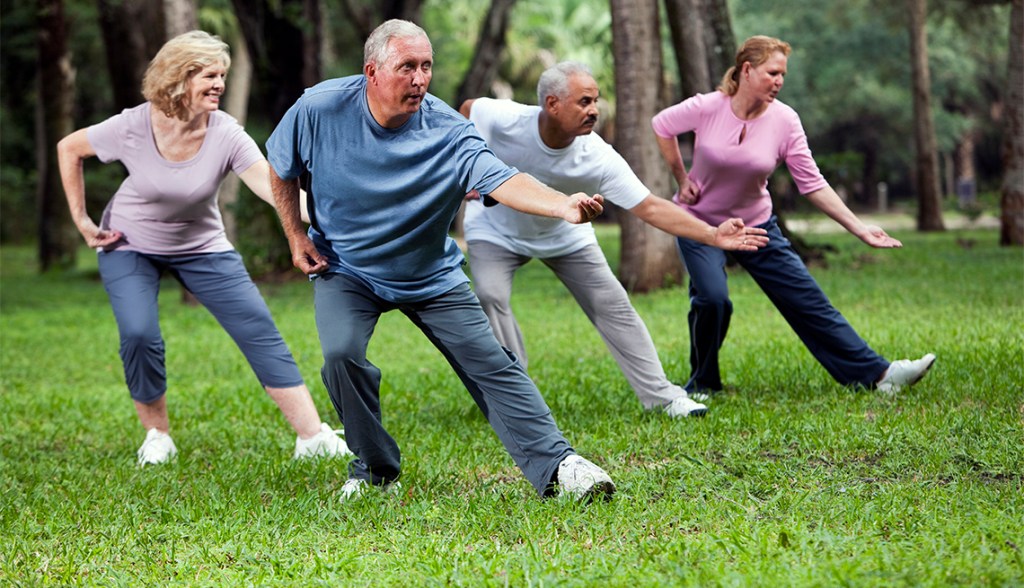
This Autumn and Winter seasons the Columbia Valley Park and Recreation District is thrilled to announce East Whatcom Gets Active classes for all ages! We are starting with classes with Dan Muffoletto to learn the basics of Chang Man Ching Tai Chi. Dan has nearly 4 decades of experience instructing Tai Chi for all ages and abilities. 

(CLICK HERE FOR UPDATED TIMES & DAYS!) These classes started October 14th and are free and open to all. Each Thursday through December 23rd (except for November 25th) Dan will teach one class tailored to seniors and those who are mobility challenged from 5:30-6:30PM and then from 6:30PM to 7:30PM Dan will teach a class for all ages. Children are welcome to attend with a caregiver who is also taking the course. Tai Chi has been shown to benefit many folks of all ages and abilities with balance, mental wellbeing, and aerobic health.

Space is limited so we ask folks to RSVP by calling 971-236-1799, emailing cvparksandrec@gmail.com or by going online to  https://tinyurl.com/2021TaiChi for the Senior Mobility Challenged classes or to https://tinyurl.com/2021TaiChi2 for the All Ages course. These classes will be held at the EWRRC at 8251 Kendall Rd. Dan also welcomes those interested to call him at 360-746-7177  or email him at  taichidan3@gmail.com. We hope you will join us!

If you are a fitness instructor and are interested in helping the community with exercise classes please call Jessica at 971-236-1799 we would love to hear from you!

In addition please consider participating in our monthly regular meetings on 2nd Thursdays at 5PM or our Park Planning Meetings on 3rd Tuesdays at 5PM -even the first 30 minutes would be valuable if you are attending the Tai Chi classes as we take public comment early in our meetings. Meetings are held online and you can join by calling 425-436-6324 and entering access code: 5397130# or by going online to https://www.freeconferencecall.com/wall/cvparksandrec. We look forward to connecting with you soon!

A Peek into the Park Planning Process Part 2

Imagining a Park Vision –

Welcome back to another peek into the park planning process. Last week we covered picking a property and evaluating the existing assets. This week we’ll dive into the next step – imagining a park vision.

There is a variety of different parks and equipment that CVPRD could bring to Columbia Valley. However, it is vital that we build parks that the community wants and needs. Park plans will vary depending on the property picked and the desires of the community. Once a property is picked, it’s up to us to collaborate with the community to determine what will change on the property. Will this park be more equipment intensive, or nature-based? 

Equipment intensive parks also vary in shapes and sizes. Members of the community could express the desire for children’s play equipment, or exercise equipment, or perhaps sports equipment? All three of these categories would play a different role in shaping the park plan. There are also different kinds of nature-based parks. There could be potential for paved paths, benches, or picnic tables. Or maybe members of the community would prefer a well-maintained nature park with no equipment whatsoever. Age groups are another category the community would want to consider. Do we want a park for children? Teens? Adults? Or maybe, a mix between several? That’s for everyone to decide and plan accordingly. The opportunities are endless, but community-based input is vital for a proper plan. 

Another thing to consider is budgeting and volunteering. Some equipment, such as a bike pump track, is more costly and it’s important to keep a budget in mind. However, with strategic prioritization, clear communication, and active participation these kinds of potential problems will either be resolved or compromised. There are many ways in which the community can volunteer their time to decrease the costs of park projects, which could in turn bring more desired assets to the future park. 

When it comes time for this step of the park planning process, CVPRD is looking into sending out surveys and hosting a meeting (either in person or online) to give everyone an opportunity to prioritize and collaborate. As always, everyone is always invited to the Park Planning Meetings that occur on the third Tuesday of every month at 5PM and regular meetings every 2nd Thursday at 5PM. You can visit our public meetings page at cv-prd.org to join. 

Check out the links below to learn more about different park amenities.

Neighborhood Parks

Pump track article

How to build a pump track 

Natural Park Design in action

More Natural Park Design

Seattle Parks with Multi-age Fitness Equipment

How to create a trail in a small area

A Peek into the Park Planning Process Part 1

Picking a Property and Evaluating Assets –

Welcome back to another blog post! Over the next few weeks, we will be breaking down the different pieces of the park planning process. From choosing a property, identifying existing features, imagining a vision, and implementing a plan. The entire process is built upon a foundation of community involvement and participation, because the best park is one that best suits and represents its users. In this blog post, we’ll cover the first step of the process – picking a property and taking inventory of its assets. 

Picking a Property

CVPRD is currently looking into available properties for a new park. When it comes to deciding on a property, we’ll need your help! It is our goal to design and implement a community park that will be useful, available, and usable by the community members. You may have a preference as to the location of the park, or a desire for certain park features. This is valuable input that the commissioners at CVPRD would love to hear! If several people are in favor of a park with a playground, or walking paths, or places for sports – that will influence the decision of which property to choose. CVPRD would love to have residents express their park preferences, and everyone is always invited to the Park Planning Meetings that occur on the third Tuesday of every month at 5PM and regular meetings every 2nd Thursday at 5PM. You can visit our public meetings page at cv-prd.org to join. 

Evaluating Assets

Once a property has been picked, the next part of the process is identifying the existing features. For example, there may be a lot of trees on the property. CVPRD will want to have the community help to decide if all the trees should stay, or if some excavating will be necessary. The same goes for other kinds of plants and greenery, it will be essential to collaborate and plan the foundation for the park. If there are any large rocks, we’ll need to agree on if they should stay or go. During this process, it will be helpful to do a site visit of the property and create a list of all it’s existing assets. Then, in a collaborative meeting or through a community wide survey go down the list and decide whether to keep each one. Together, we can transform underutilized properties into vibrant community parks for everyone! The more participation we have during the entire park planning process, the better the park will be suited for Columbia Valley’s residents. 

Designing, Creating, and Maintaining Safe Parks

Welcome to this week’s blog post! So far, we’ve covered the different benefits of parks and shared some fond memories from community members. However, we want to make sure that we address and concerns and hesitations our community may have about bringing parks to Columbia Valley. One common concern is that the addition of parks may increase unwanted or undesirable activity. In this blog post, we aim to alleviate some of those concerns and explain how we can bring safe community parks to Columbia Valley for all residents. 

There are crucial elements of park design that influence safety and security of community parks. The CVPRD commissioners are dedicated to designing local parks that are not only inclusive for all residents, but also feel safe and comfortable. With this, community involvement is a key element to success. In future blog posts we’ll discuss more about the park planning process and how we hope more community members become involved. For now, let’s go over some of the park design basics that will create safe park environments. 

Lighting is usually one of the first elements that comes to mind when it comes to increasing safety, and for a good reason. Smart, methodically placed lighting can sincerely help increase safety in parks at night. The article “What Role can Design Play in Creating Safer Parks” (linked below) mentions a technique called hierarchy lighting. Hierarchy lighting is a technique that is used to place lighting effectively. Depending on the park layout and elements, lighting will be placed where it is most needed. For example, lighting should be placed around pedestrian walkways and other activity areas to encourage traffic flow. Alternatively, if there are particularly dark parts of the park, we would also want to place lighting there to discourage any unwanted activity and increase the sense of safety and comfort. A well-lit park at night will drastically decrease the chances of any undesirable activity.

Park layout, placement, and sight lines also play an important role in park safety. It’s important to have parks in areas that will have regular traffic, even if it’s just residents passing by car. Within this, clear sight lines into and out of the park are important. Those in the park should stay visually connected to those passing by the park. This greatly increases the number of “eyes on the street” and helps create a safe and inviting environment. Park layout should also be easy to understand and never confusing. We’ll want anyone to understand a clear layout of the park from every entrance. This will not only make the park seem less intimidating, but it will be more welcoming to residents. A park with clear sight lines, an easy-to-understand layout, and that has regular traffic will attract eager park goers. The more residents that are happily engaged in the park, the less likely undesired activity will occur. 

Finally, another key aspect of safe parks is regular maintenance. There have been several studies that show that a well-maintained and frequently visited park is a safer park for residents. Within all of this is community involvement, a safe park is one that the community cares about and uses regularly. 

There is plenty of research and articles out there that helps inform us on how to make smart park decisions for our residents. By working together, we can bring safe, inclusive, and exciting public parks to Columbia Valley. If you’d like to learn more about safety in parks, feel free to check out the links below. As always, we’d love to hear from you if any comments, concerns, or questions arise – you can email us at cvparksandrec@gmail.com and we’ll get back to you at our earliest convenience!

What Role can Design Play in Creating Safer Parks

Make Your Park Safer

Before Parks Go Bad: Safety Measures and Community Action Can Give Public Spaces A Makeover

How to Make Public Parks Safer

Benefits of Different Kinds of Park Equipment

Welcome back! This week we’ll be exploring different kinds of park equipment and the benefits of them.

First, let’s begin by discussing the benefits that playground equipment bring to children. Playground equipment is a great way to get children active and engaged outdoors. Playground equipment also provides children with a safe space to develop physical, emotional, imaginative, and social skills. Monkey bars, slides, balance beams, and climbing structures all help children improve their flexibility, coordination, balance, and make exercise fun! Children can enhance their social skills through park equipment through making friends, playing games, agreeing on rules, and resolving conflicts. Through park equipment, children are also encouraged to strengthen their imagination through the creation of different games! The physical, social, and imaginative benefits that park equipment brings to children has a positive emotional impact on children. Children feel a boost in their self-confidence when their social and physical needs are met through playground equipment.

Families also benefit from park equipment. A park that includes playground equipment, grassy areas, and picnic tables provides a fun space for families to gather! The children can play at the park, the teens can throw around a frisbee and run around in the grass, while the adults can engage with themselves along with all the children! Parks are a great place to gather and connect with one another. Adults without children can also gather at parks and have an enjoyable experience. Getting outside and having a picnic on the grass, or barbecuing under a pavilion are great ways to gather with those you care about!

Finally, there are types of park equipment intended for adult use only. This kind of equipment helps keep people active, which boosts happiness and healthiness! Fitness park equipment also helps make exercising more fun, and encourage more people to get outside. Adult park equipment is also flexible for every person and fitness level. Examples of different fitness equipment are walking paths, swings, pull-up bar stations, and climbing walls. Having parks that are inclusive to everyone in the community provides a safe space to gather, exercise, and enjoy one another!  

While parks are a great place for children to learn, grow, and exercise, there is all kinds of different park equipment that can bring benefits to everyone in the community!

The information from this blog post is sourced from the links below. Feel free to check them out if you’d like to learn more!

The Importance of Playgrounds for Children

9 Unique Benefits of Outdoor Adult Fitness Parks

Playgrounds Don’t Have to be for Children Only. Adults Benefit from Spaces to Play, Too.